





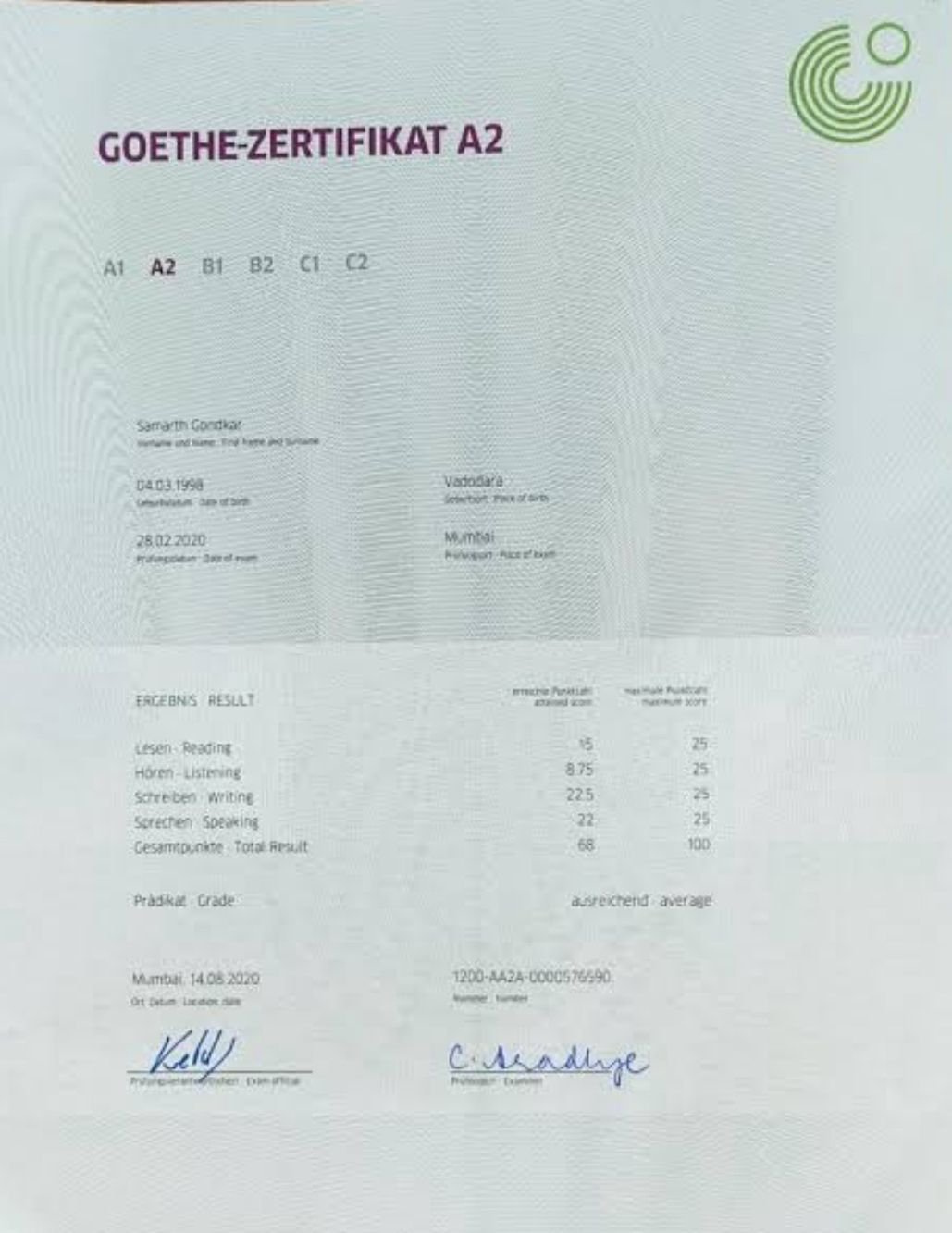
In your first steps with German, you learn how to introduce yourself and ask simple questions. You might say, "Hallo! Ich heiße Anna. Ich komme aus Deutschland. Ich wohne in Berlin." At this stage, you're focusing on basic vocabulary like numbers, colors, and days of the week, and using simple verbs like sein (to be) and haben (to have) in the present tense.
As you move forward, you begin talking about your daily life and routines. You can say things like, "Am Wochenende gehe ich gern spazieren oder treffe Freunde. Ich kaufe im Supermarkt ein." You’re starting to understand more complex sentence structures and using separable verbs like einkaufen. Your vocabulary grows to include topics like food, hobbies, and directions.
At the intermediate level, you’re able to describe past experiences and express your opinions. You might share something like, "Letztes Jahr bin ich nach Österreich gereist. Es war eine tolle Erfahrung, weil ich viele neue Leute kennengelernt habe." You're now using the past tense more fluently and combining sentences with conjunctions like weil and obwohl. You start writing short essays and emails in German.
Your language becomes more confident and expressive. You can discuss abstract topics and defend your point of view. For example, "Meiner Meinung nach sollte Umweltschutz in der Schule stärker thematisiert werden, da es ein zentrales Thema unserer Zukunft ist." You understand more complex grammar like the passive voice and indirect speech, and you can read articles or listen to podcasts without much difficulty.
At the advanced level, your German is fluent and natural in both formal and informal contexts. You’re able to express nuanced thoughts, such as: "Obwohl technologische Entwicklungen zahlreiche Vorteile bieten, dürfen ihre gesellschaftlichen Auswirkungen nicht unterschätzt werden." You master formal writing and academic vocabulary, and you understand the subtleties of tone, register, and implication.
At this final stage, your German is nearly indistinguishable from that of a native speaker. You effortlessly use idioms and cultural references, like in this sentence: "Er hat den Nagel auf den Kopf getroffen, als er sagte, dass Innovation ohne Verantwortung ins Leere läuft." You navigate complex texts, philosophical discussions, and even regional dialects with ease, understanding irony, humor, and subtext without hesitation.